

Studio Japandy and the Long Way Round: How Carlo Built a Design Practice from Two California Homes

Carlo has a theory about his own life. He describes it, with the particular ease of someone who has made peace with their own circuitousness, as a series of mid-life crises.
"I've been in a bit of a mid-life crisis — this is my fourth or fifth one." — Carlo
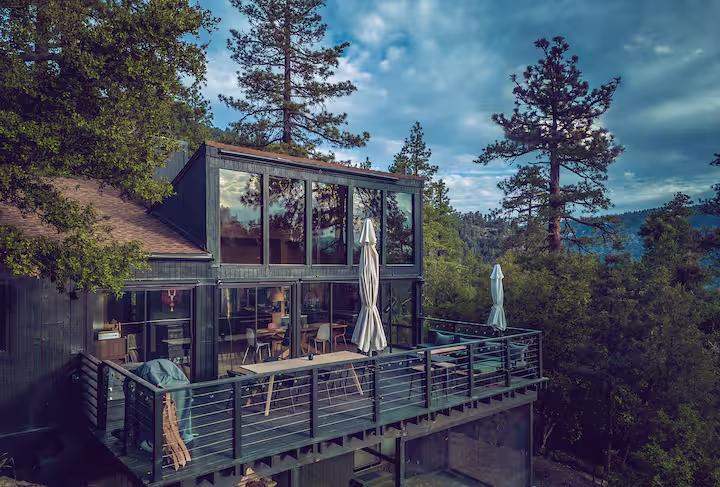
There was the engineering degree he completed at his parents' insistence, the basketball coaching career he built over seven years after abandoning engineering, the photography and film directing work that followed after he abandoned basketball. And then, sitting inside a 1970s house in a California mountain town with what he describes as a "horrible 90s renovation" and exceptional bones, he found himself asking the question he had been setting aside since childhood.
What if he went back to architecture? Not to study it. To do it.
Where It Begins
Adele is from Cornwall. Carlo is from Bologna. They met at a photography studio in Australia, crossed South America and Canada together in a VW van, and settled into Vancouver, where they spent nearly a decade building careers in film and commercial production. The work took them through extraordinary spaces — architects' houses, designers' studios, the sets and locations of a visual industry that cares intensely about how a room looks and feels — and over time they developed a precise and shared sense of what distinguished a space that worked from one that merely looked like it did.
The California mountain town was Adele's discovery, found during a late-night search through property listings.
"We went up in our van, stopped in town, stopped at the pub, got talking to the community, and it was beautiful and ridiculous. We were like, 'What's wrong with this place? How can it be so affordable and beautiful?'" — Adele
They missed the first house they tried to buy. The second came through a failed escrow — a perfect storm of timing and impulse — and twelve months of renovation followed. Then a second house in the desert. Then, inevitably, a design studio.
The Philosophy
The word Japandi — a compound of Japanese and Scandinavian — has entered the mainstream of interior design vocabulary with enough frequency to risk losing its meaning. Carlo's version is specific enough to resist that.
The Scandinavian influence is biographical: a year studying in Sweden, a deep familiarity with Scandinavian furniture and cabin traditions, an instinct for the particular quality of calm that arrives in a room from which everything unnecessary has been removed. The Japanese influence runs deeper still.
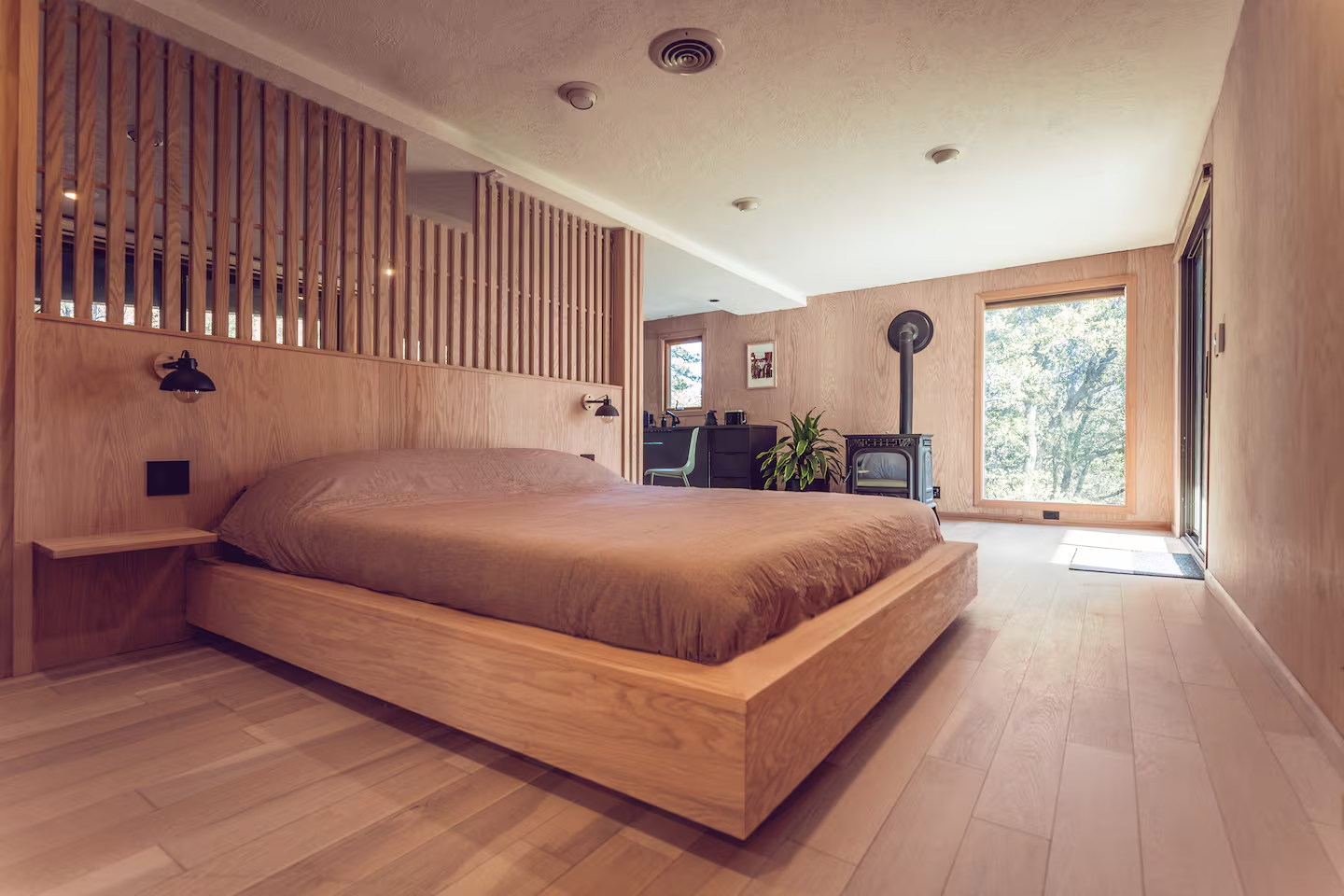
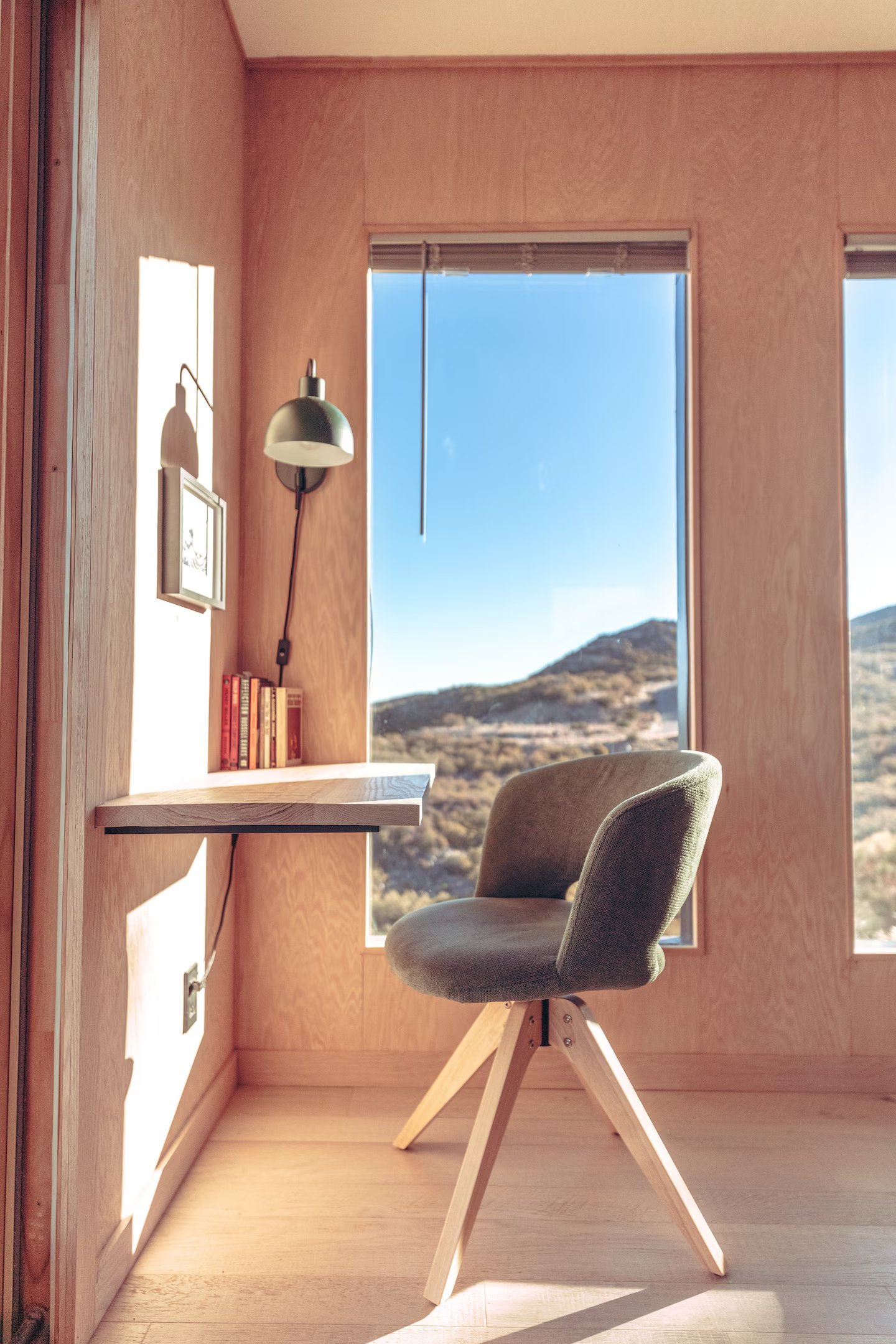
"One thing that I love about Japanese architecture is how purposeful it is. There's never an inch of space wasted." — Carlo
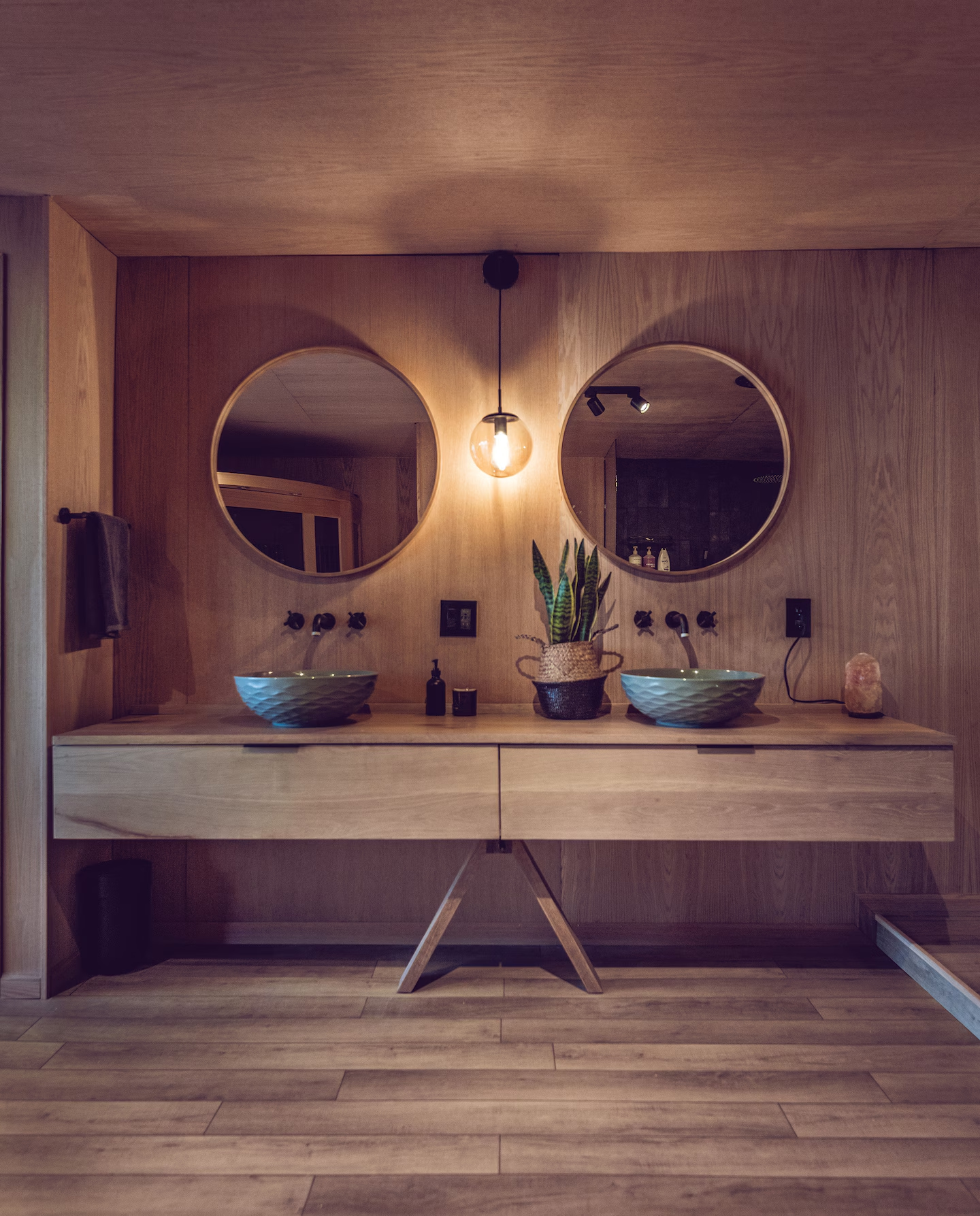
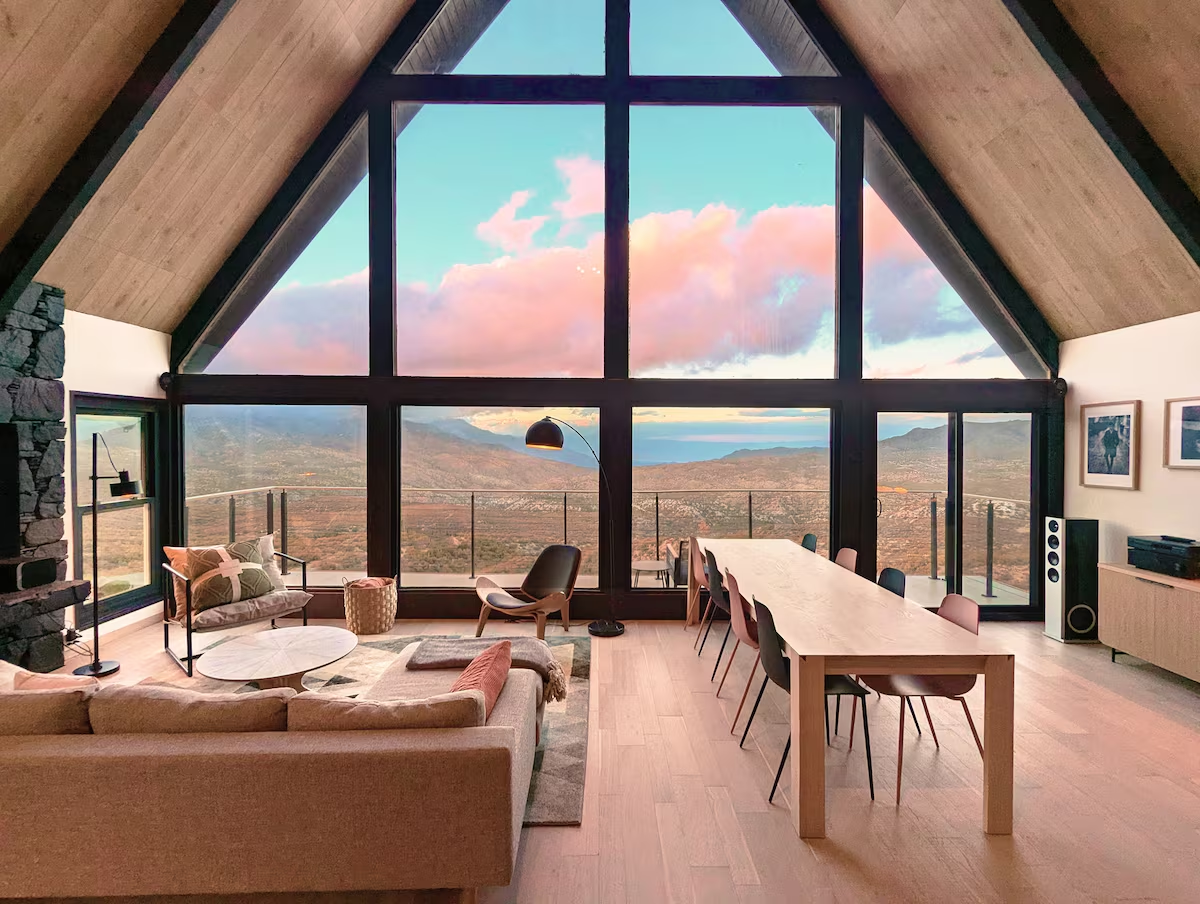
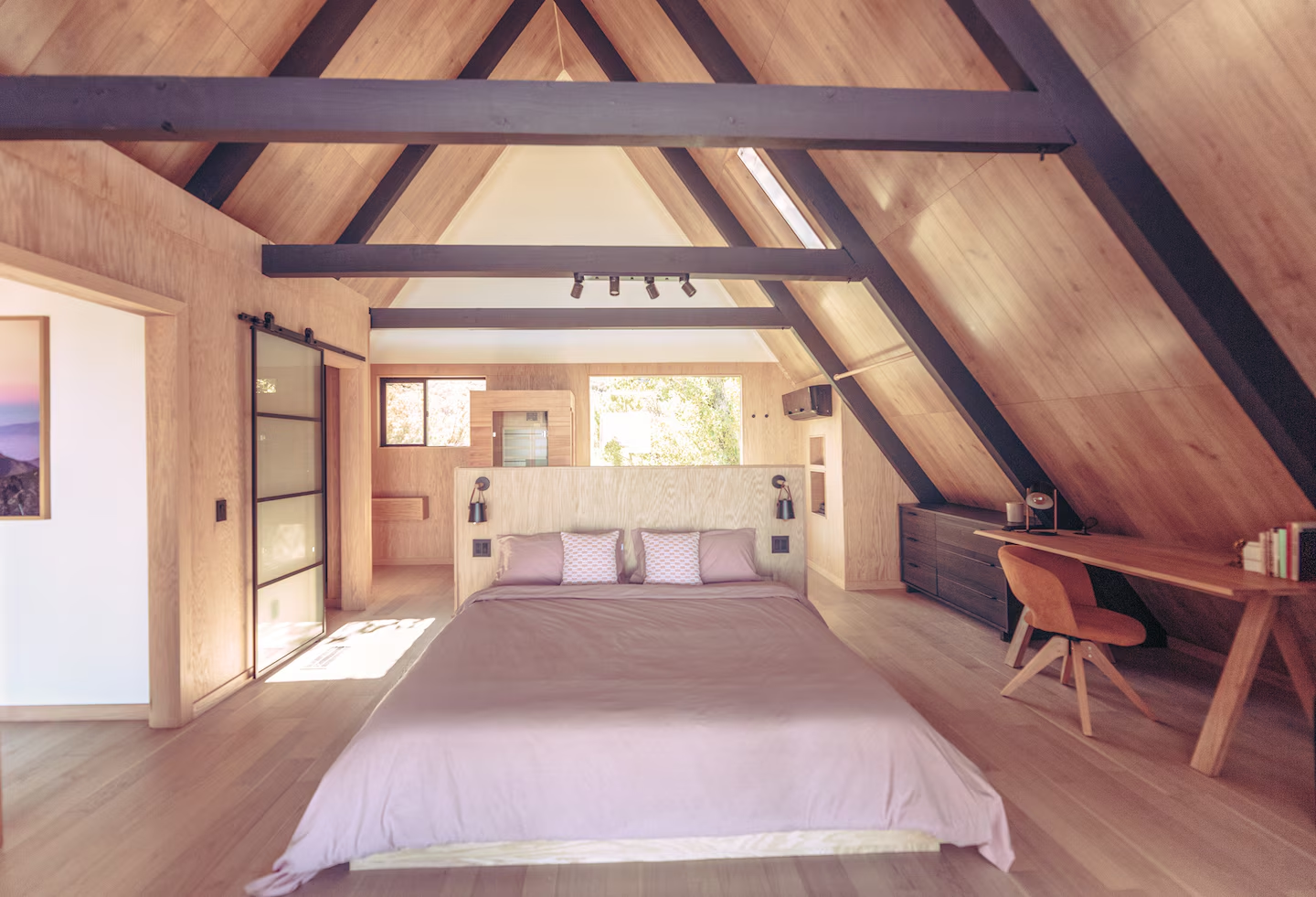
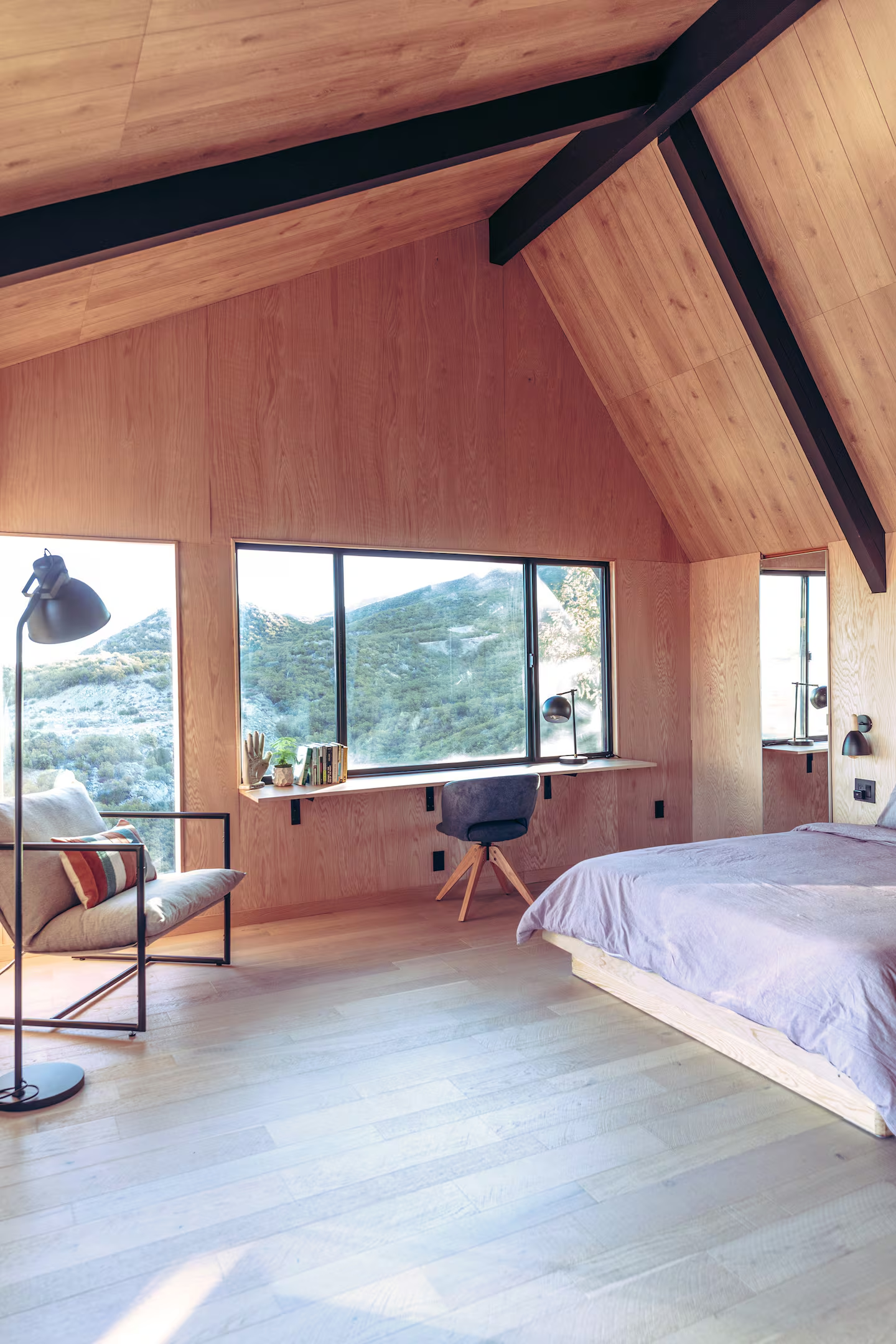
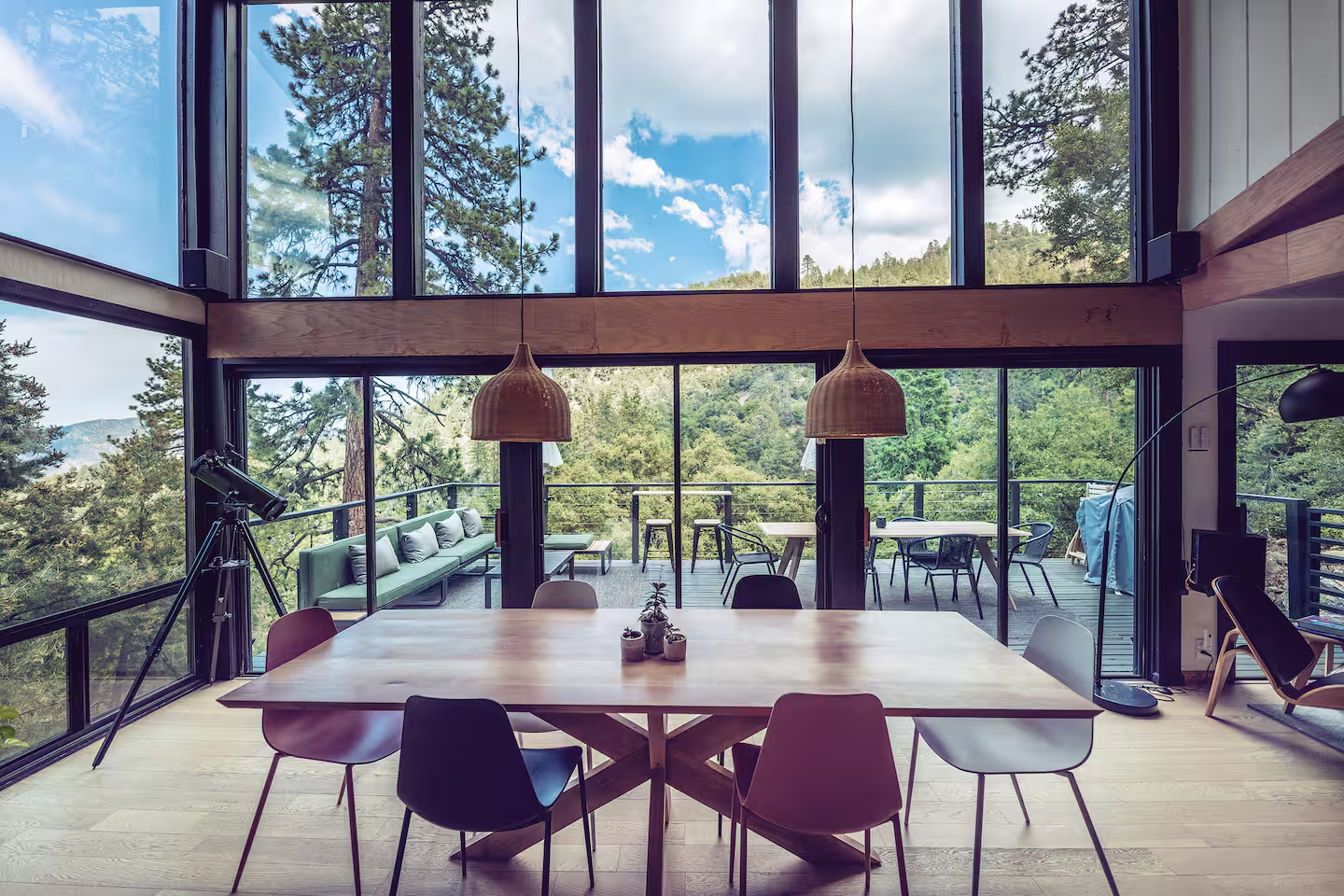
In both California homes this translates as: open-plan living spaces where kitchen, dining, and sitting areas exist without partition, because division is waste. Custom and bespoke furniture designed to belong rather than arrive. Black window frames that disappear optically, redirecting attention from the architecture to the landscape it contains.
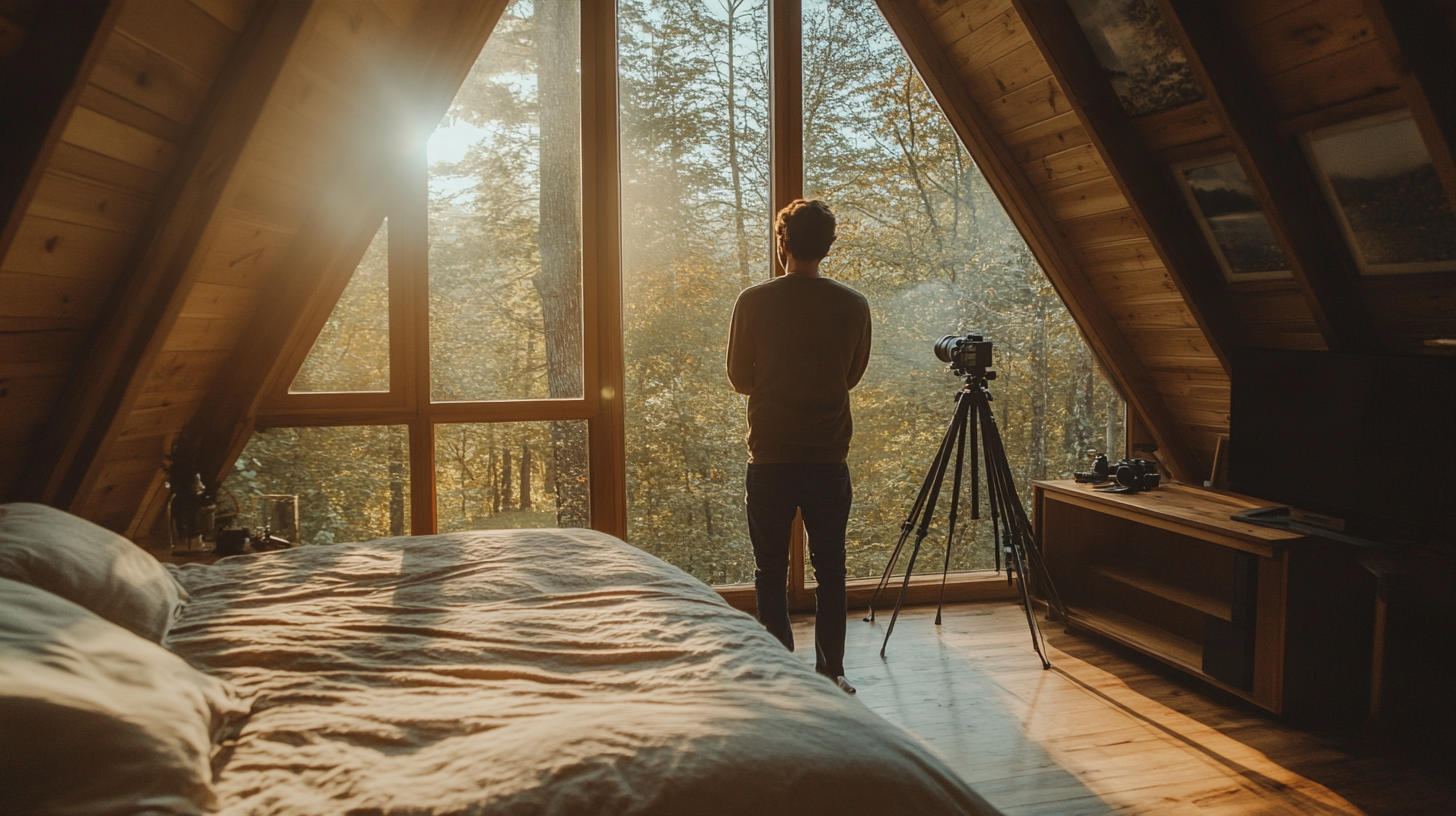
"If anything, it's been about reducing distraction from the view. We've painted the frames black so the frames disappear. I want people to forget that they're in a house." — Carlo
And, running beneath all of it, a principle that functions less as a design rule and more as an ethical position:
"I will never build something that I will not want to live in." — Carlo
How Guests Are Meant to Live
The homes are designed not for photography — though they photograph well — but for a specific quality of time. Adele is deliberate about this.
"We've tried to keep the living area as minimal as possible so that people sit and have a cocktail and talk and play the board games. We don't necessarily want them just on their phones and devices." — Adele
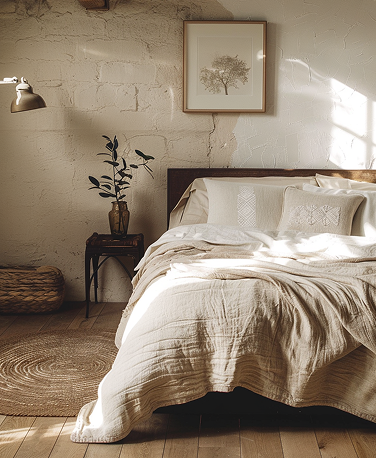
The kitchens are positioned as the social centre of each house because that is where people actually gather, not where the living room tells them to. The pantries are stocked before arrival. The record collections are theirs. The books on the shelves have been read. And the soaking tubs — the same egg-shaped deep bath in both homes, chosen with the care of a dining table — are there because bathing, in the tradition of the Japanese spaces that shaped Carlo's thinking, is a ritual that deserves architectural space.
The result, across 169 five-star reviews and two fully realised homes, is spaces that guests consistently describe as better in person than the images suggest. For two people with careers in professional photography, this lands as both a paradox and the highest possible compliment.
The Studio and What Comes Next
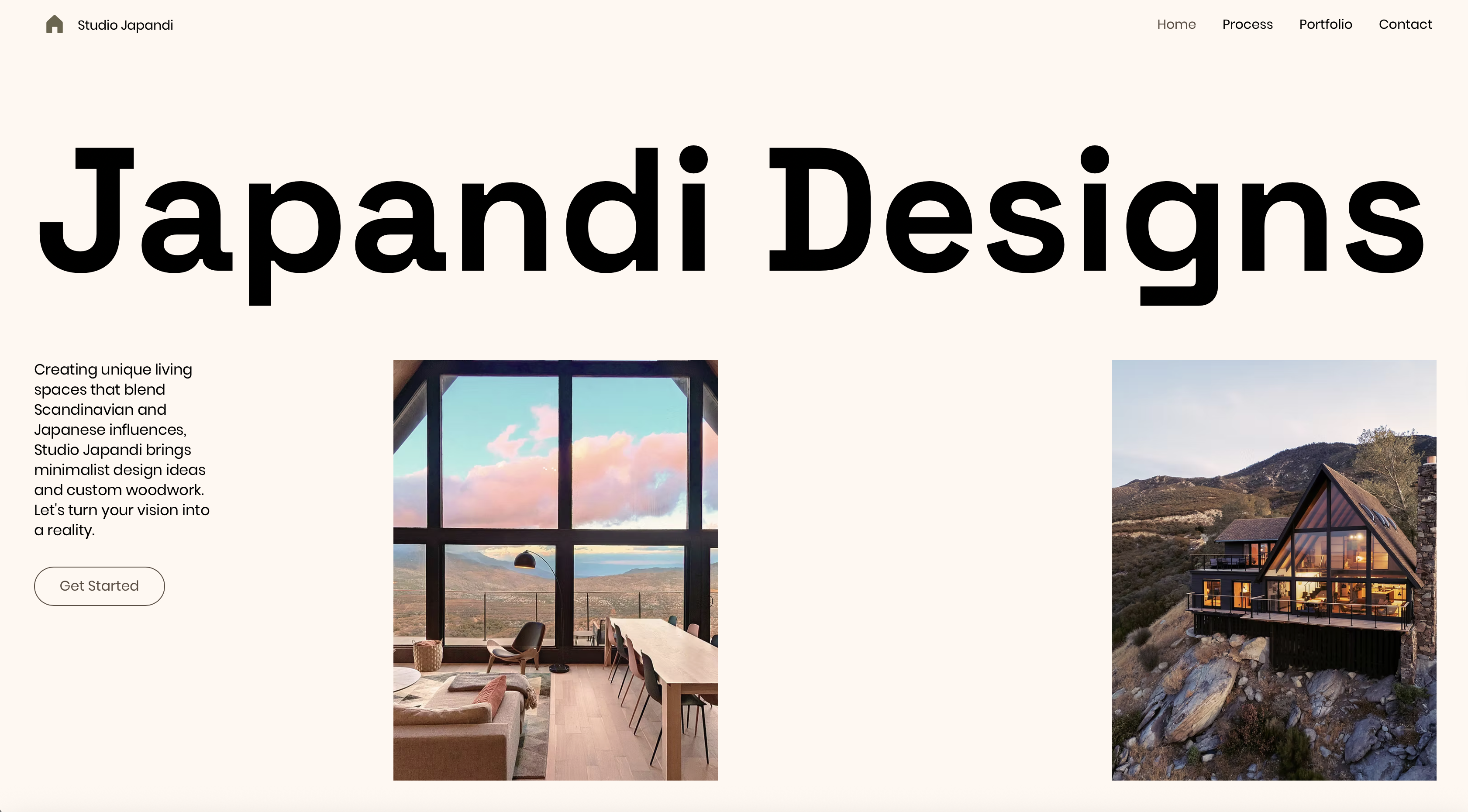
Studio Japandi was founded after the second renovation made clear that what Carlo had been building across two houses was, in fact, a practice. The studio brings the same philosophy — no wasted space, nothing he wouldn't live in himself, every material in service of the landscape rather than competing with it — to new projects, grounded in two real-world homes that have been lived in, tested by guests, and refined over time.
You can see their work and current projects at https://www.studiojapandi.com.
New work is already in motion, including a small one-bedroom structure on the land adjacent to the mountain house — something Carlo intends to build from foundation to finish, hands-on, as a proof of everything the studio represents.
The question of funding, as with all ambitious design work, remains open to creative interpretation.
It is, when you trace it back, the story he began telling when he was a child in Bologna, imagining buildings. He simply took the long way round — through engineering, through basketball, through film, through a van on the roads of South America and Canada, through a pub in a California mountain town where something clicked into place.
And arrived somewhere better for it.
Listing with Locèlle
Both Desert Mountain Retreats properties are listed on Locèlle because Adele and Carlo share the platform's founding conviction: that the relationship between guest and owner is better without an algorithm between them. They moved toward direct booking after years of strong platform performance, frustrated less by the fees than by the distance. On Locèlle, they are available. The relationship begins before arrival and continues after departure.
"They'll be taken care of by us throughout the booking, and nature will do the rest." — Adele
Stay in the homes that gave rise to the studio: The Pine Mountain Club Treehouse in the pines of Southern California, and An A-Frame Above the World at the threshold of desert and mountain in Mountain Center.
If you own a design-led property and are ready to move beyond the platforms, Locèlle would love to hear from you →


Discover homes worth traveling for
Join the Locèlle newsletter for design-led stays and off-market finds
Get on the list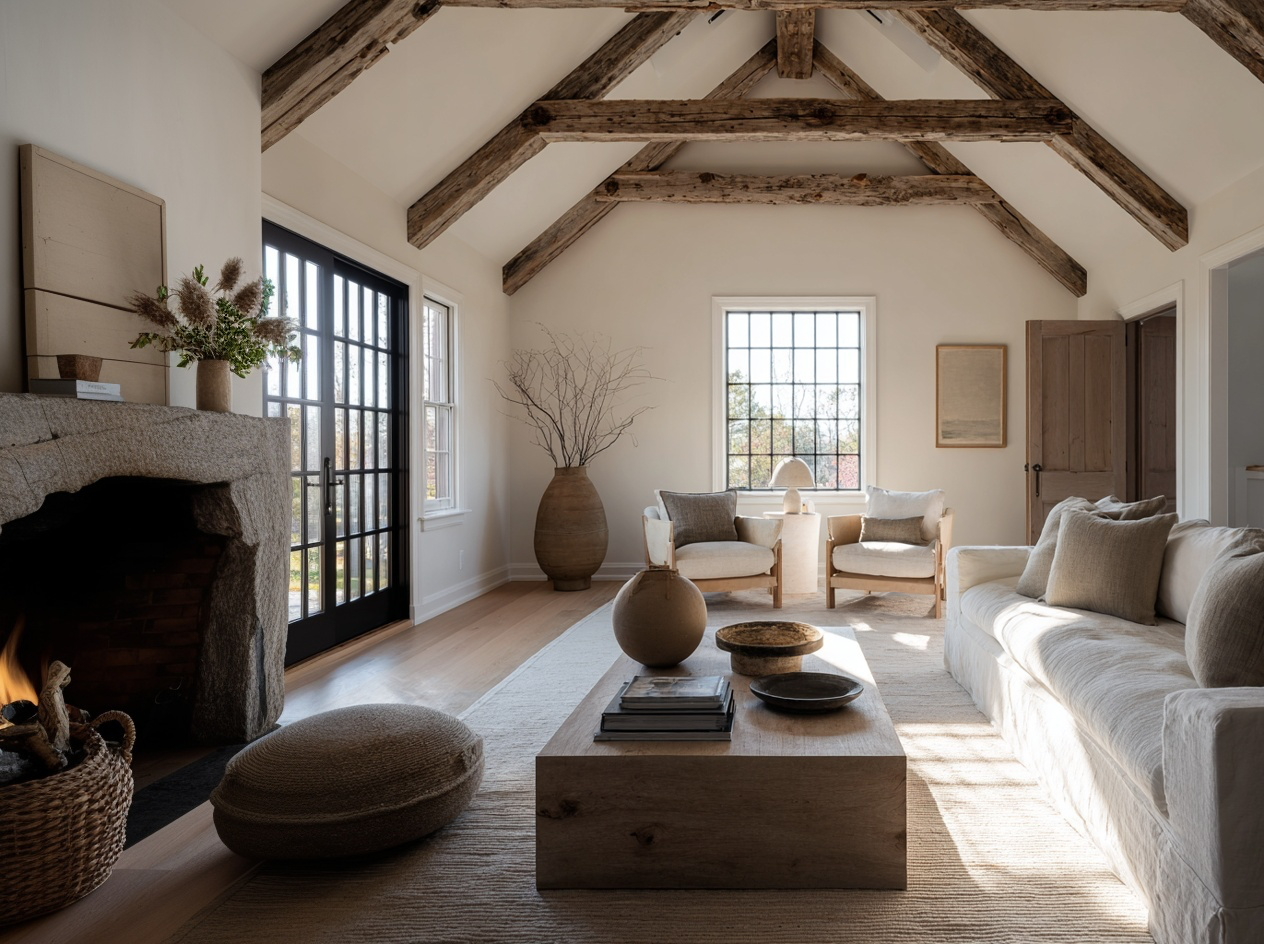
Discover homes worth traveling for
Join the Locèlle newsletter for design-led stays and off-market finds
Get on the list